

Bookmark and Share

BROOKLYN, New York - Imagine having the opportunity to ask a few questions of a renown movie and film critic who has published thousands of acclaimed reviews, been quoted in major periodicals worldwide and is followed by major and indie directors alike. If you're one of the millions of old school AOL/CompuServe subscribers or a more sophisticated twitter jet-setter whose hip to the coolest scenes between Holmby Hills and Greenwich, you've more than likely read one of his reviews. Critics don't usually talk about themselves; and though we've tried over the years, its been tough getting any information about Harvey, out of Harvey. A man whose critical influence has both entertained and informed internet users since 1991 of what to expect for the price of a ticket, so without further ado, a bit on Harvey, in his own words.

Twitter.com/ArizonaReporter


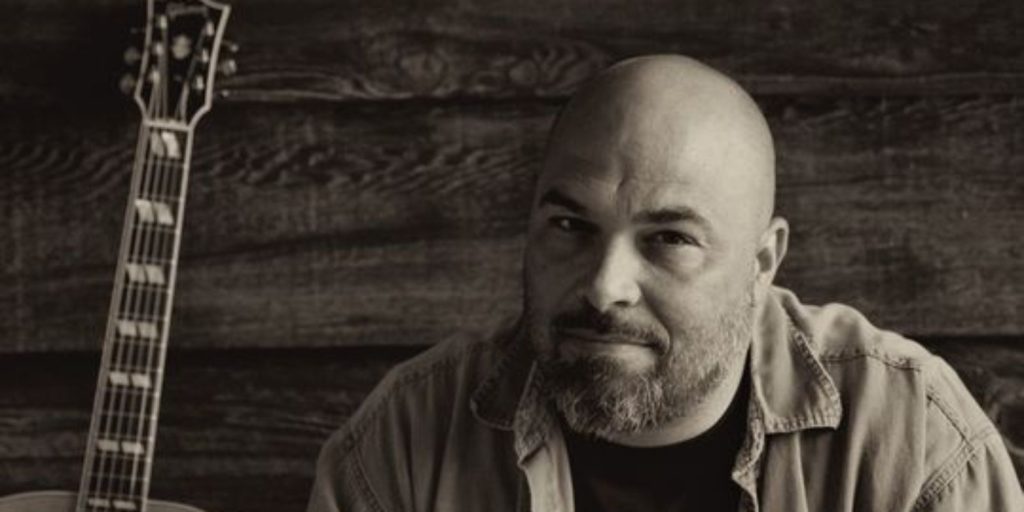
HARVEY KARTEN, Ph.D., Brooklyn, New York


Film Critic and Founder, New York Film Critics Online


Doctorate Studies - Theatre, City University Graduate Center
Master of Arts- Film and Theater, Hunter College, New York, NY
Esteemed Critique: Broadway and Off-Broadway Theater, Film, Major Motion Picture
Founder: Online Film Critics Society and New York Film Critics Online
Official Websites: CompuServe, NYFCO, Arizona Reporter

I retired after thirty-two years of teaching Social Studies, English and Theater in New York City public high schools. As they say, the important question to ask after assuring yourself you have enough funds to make it for another quarter-century or so (a decent pension takes care of that) is: what are you retiring to? Without the frissons provided from dealing with 150 teens each working day-all of which make the time zip by-a retiree without a plan can find the clock hands moving as slowly as the plot of an Eric Rohmer film.

I wasn't sure at first, so I landed interviews with some colleges, one of which wanted me to become an adjunct teacher of speech, the sort of gig usually reserved for graduate students hungry for the measly bucks that such work pays. A publisher wanted me to read magazine articles on Education, to classify them for a reference book put out by H.W. Wilson. No dice.

I bought a computer in 1991 and as luck would have it, CompuServe, this country's first internet service provider (1985-present), asked me to review movies. After lobbying a couple of dozen studios and indie publicists, I was put on all lists, ready to attend screenings to review them for CompuServe. Sometimes the best things in life happen by surprise.

Before my days as a critic, I attended movies with my pals at the local Brooklyn neighborhood theater, the Loews Boro Park. Going to Manhattan was somehow considered like traveling to Tibet. Branching out later to Manhattan and to the so-called art scene-which included theaters that served complimentary espresso in the lobby-I found my taste moving from "Pinocchio," which was my favorite at age seven, to "Gone With the Wind," which you had to say was your favorite since everyone else did. But my real all-time top movie is Milos Forman's "Amadeus," a thrill from start to finish because of its vivid imagination, putting the master's life into broad, comic form, its lavish photography, its use of some of the greatest operas, symphonies, concerti and sonatas ever written.

This brings me into the idea of creativity. Forman knew how to take the staid life of a bewigged composer, a figure from Mars judging by what most people think of him if they've heard of the man at all, and transcending reality to capture a larger truth: what is greatness? Forman puts his own personality into Mozart's to transform him into a fellow who is every bit as human as you and I, who could joke with his wife Constanza while hiding with her under a table in a Vienna palace, and who turned a lesser musician, Antonio Salieri, up the wall with rage because Salieri could not compete. The plot embraces envy, madness, and murder, all in the service of making its audience wonder about whether Mozart was poisoned while entertaining us with glorious music.

I'm often asked, sometimes by the highly vocal crowds of 14-year-olds who write those nasty comments on Rotten Tomatoes: do you really prefer "art" films to commercial ones? Aren't arty works booooooring? The question of art has probably been around since audiences watched Clytemnestra murder Agamemnon, though they may not have much to compare the play with since none of the Greek theater could be considered "commercial." Art films surprise. Commercial films, using familiar stories, both stimulate and sooth. Both are valid. As I stated in a recent review, there's a place for a staid police movie like "Police, Adjective," which is filmed in real time and involves no violence, and there is quite a bit of room for something like the boorish but thrilling "Brooklyn's Finest." After seeing too many of one type, you can't be blamed for wanting the variety of the other.

I'm also asked, "What is a proper review?" There's no such animal. Someone like Anthony Lane of The New Yorker will be jokey, even about serious pictures, while Armond White of New York Press will be scholarly but with a distinct personal view. (White does not generally like writers who show disrespect for religion or types of people or politicians. He calls such writers "hipsters." Lane probably couldn't care less. The two are read by different types of people.) Some reviewers include synopses, though hopefully not including spoilers; others have no problem analyzing movies as though the readers have already seen them. I'm the former type of writer because while I believe that reviews should be read before one has seen the movie, such an ideal is not likely. Readers want to know at least what a movie is about, and use critics as consumer guides.

What do critics do when they're not watching movies? Some do nothing. I have colleagues who see four movies a day. One fellow, who is a member like me of New York Film Critics Online, posted over a thousand reviews on rotten tomatoes last year. As for me, I suppose books, newspapers and magazines would be in my collection, including The New York Times, The Wall Street Journal, The New Yorker, Harper's, and Atlantic. I also like books on animal rights (I'm a card-carrying PETA member), on civil rights (Gail Collins has a great one on how women have progressed since the 1950s), on psychology and on politics. As for favorite haunts, my days of clubbing are long gone, but I do like restaurants particularly in New York's Chinatown, which has two terrific dim sum houses.

As for grading movies (some critics do not, such as those with the New York Times and The New Yorker), I consider myself lenient, doling out B+ quite a few times each year. To get a straight A, a film would have to be almost as transcendent as "Amadeus." To get an A- (visit Harvey's A-List In Movies) a movie would have to surprise, to dazzle, to show originality of thought and process, to appeal to the mind and heart. Most other critics have tougher standards. Critics are more demanding than regular audiences because they've seen a lot more. They get tired of same-old, same-old, while many folks actually seek out films with familiar themes, like kids who want you to read them the same story every night. I realize that some people might see a given movie ten times or more-think "Star Wars" or "Lord of the Rings."

One way that I think my reviews stand out from most others is that I often give background information on a movie's themes to put it into a proper context. Instead of tearing right into the merits and problems of a film, I provide a frame. My most recent review, that of "Brooklyn's Finest" (not about me), began by my giving a contrasting picture, Romania's awfully slow and arty "Police, Adjective." If we're dealing with "Woodstock," I'd of course chat a while about what the real Woodstock was like, how the newspapers covered the event as it was unfolding.

Someone asked what I would do if I bumped into someone in the movie industry in Times Square and he recognized me, bragging that despite my negative review, his box office soared. I would reply simply that I call ‘em the way I see ‘em, and I'm sure most of my fellow critics are not surprised when the widely panned "Valentine's Day" was the number one box office during the weekend it opened. There is a gulf between typical moviegoers and critics who may have seen 2,000, 3,000 movies or more and in addition had to think about what he saw in order to write an analytical review.

I'd add that critics, like all journalists, do not work in a vacuum. We chat regularly with others in the profession. I'm proud to have founded New York Film Critics Online in 2000, an elite group of 32 internet writers of reviews. We give awards each year. Check out www.nyfco.org to look into those awards and see who our members are. You will recognize some of the names, maybe even mine.

© 2010 Harvey Karten
Introduction by Arizona Reporter

More Reviews by Harvey Karten on Arizona Reporter


Complete list of Reviews by Harvey Karten on IMDB

View More


© 2010 Arizona Reporter (reproduction prohibited)
blog comments powered by Disqus

Entertainment

I like two types of films, action and westerns, both with guns, balls and beautiful women. Bullets and blood are exactly how Sly closed out his infamous Rambo franchise and as a director he has learned a vital ingredient in filmmaking-to surround oneself with the finest in the trade that can compliment the grittiness and violence his more recent films are known for.
Probably one of the best examples of Tourette Syndrome I can think of is the Irish bartender characterized by (Gerard Parkes) in Troy Duffy's directed franchise - The Boondock Saints. Simple or complex the neurological disorder affects more people than one would imagine. Historically having its suffers labeled with being demon possessed.

Quantum Leap Thinking

How many wonderful ideas have never been put out in world because their creator was afraid of appearing foolish? How many people have stifled their creativity because of fear? How many of you have never allowed your creative vision to become reality for fear of asking for help or creating a partnership? Far too many, I'm afraid.
More Quantum Thinking

  Finding AZR
  XML/RSS Feed


Subscribe Via Kindle

AZR is iPhone™ & iPad™ Compatible

Around Arizona

Write just one sentence. Just one, I dare you... I double dare you... I triple-dog-dare you!

WRITE YOUR REPRESENTATIVE.


AZR - It's that time of year again as the monsoon rains peak; only to to give way to humidity, fruit flies and the upcoming mosquito season. Were taking this opportunity to share with you a couple tricks to ridding your home of these pesky bugs.


Arizona Guide

With dove season being open (Sept. 1), it's a good time for a cast-n-blast trip, especially along the lower Colorado River.

Yuma has the prime dove hunting with all of its agricultural fields. During the past two weeks, however, I witnessed lots of doves all along the Colorado River from the Topock Gorge to Yuma (and also lots of fat quail for October fin and feather trips).

Arizona Events

2nd Annual Spanish and Flamenco Festival in historic downtown Tucson. This is a unique opportunity to experience flamenco and Spanish culture in a traditional late-night, outdoor festival atmosphere. Traditional Spanish tapas will be served along with Casa Vicente's extensive dinner menu.


Susan Granger Reviews


When many critics, including me, review a movie they take into consideration how well it accomplishes what it sets out to do. If it's a B horror-flick, is it a real fright-fest? Do you cringe? Do you shriek? If the answer is yes - then it accomplishes what it's meant to do, like "Snakes on a Plane."

Harvey Critic


It's chic for a movie critic to say that "the book is better," but in this case-considering that the story is a slow-moving psychological suspense thriller-Martin Booth's 1990 novel is the way to go. As you turn the pages you will doubtless wonder what comes next, the type of tale that intrigues on the page but comes across inert on the big screen. As directed by Anton Corbijn, "The American" is spare of dialogue (script by Rowan Joffe and the novelist), the music by Herbert Grönemeyer either non-existent or anything but intrusive, with a landscape in Italy's Abruzzo region that's, what should we say, European? The medieval town built on a hill, scene of most of the action, would be nice to drive through but would hardly entice tourists to stay overnight. This is the sort of place, however, that a fellow in the service of assassins might want to live, a form of redemption that he would not likely find in his home country but rather as an expatriate living the quiet life away from what novelist Martin Booth calls "the shadow-dwellers."

  XML/RSS     Arizona Reporter         The Web Newsroom     Twitter